
 By BSTeam
 Having three or four loan repayments due every month can make a person’s finances look worse than they actually are. The problem is not always the amount borrowed. Sometimes it is the structure of the debt: one personal loan here, two credit-card balances there, different due dates, different interest rates and a growing list of reminders.
That is one reason borrowers consider debt consolidation.
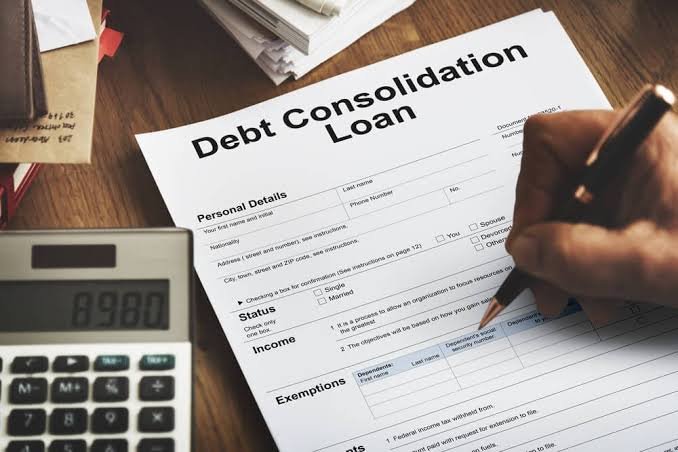
A debt consolidation loan in India can bring eligible outstanding debts into a single repayment arrangement. Instead of managing several EMIs and payment dates, the borrower may have one loan and one monthly payment to track.
But there is a catch that is easy to miss.
A single EMI does not necessarily mean a cheaper loan.
If the new loan has a longer tenure, higher overall interest or substantial charges, the borrower could end up paying more despite having a lower monthly payment. The decision therefore needs to be based on the total cost of the debt, not just how convenient the new EMI looks.
For borrowers considering this route, Olyv’s guide to a debt consolidation loan in India provides another reference point for understanding how consolidation through a personal loan can work.
Why Do Borrowers Consolidate Multiple Debts?
Consider a salaried professional earning ₹70,000 a month.
They have a personal loan with an EMI of ₹11,000, a credit-card balance requiring ₹8,000 a month, and a consumer loan with a ₹5,000 payment. None of the individual payments looks unmanageable. Together, however, ₹24,000 is leaving the account every month before rent, groceries, utilities, insurance and savings are considered.
There is also the mental overhead of remembering three separate due dates.
Consolidation can address that administrative problem by replacing several eligible debts with one loan.
There are other reasons a borrower may look at it:
- to simplify monthly repayments;
- to move from relatively expensive debt to a potentially lower-cost arrangement;
- to create a clearer repayment timeline;
- to make monthly cash flow easier to plan;
- or to stop juggling several outstanding balances at once.
That does not make consolidation inherently good or bad. It depends on what happens to the total repayment cost and whether the new EMI is sustainable.
How Does Debt Consolidation Actually Work?
The basic idea is straightforward.
Suppose a borrower has the following outstanding balances:
| Existing debt | Outstanding balance |
| Personal loan | ₹1,50,000 |
| Credit-card balance | ₹75,000 |
| Consumer loan | ₹50,000 |
| Total | ₹2,75,000 |
If the borrower qualifies for a suitable consolidation facility, a new loan can potentially be used to clear eligible existing obligations.
The borrower then repays the new loan according to its terms.
What changes is the repayment structure. Instead of three separate obligations, there may now be one.
What does not change is the fundamental fact that the money has to be repaid, with interest and applicable charges.
That distinction matters because consolidation is not debt cancellation. It is a restructuring of how the borrower manages the debt.
When Does Consolidation Make Financial Sense?
The strongest case for consolidation is usually one where the new arrangement improves both manageability and cost, or at least provides a meaningful improvement in repayment structure without creating an excessive additional cost.
It may be worth comparing when:
- several unsecured debts are outstanding;
- the borrower is managing multiple repayment dates;
- the existing borrowing is relatively expensive;
- the proposed loan has a reasonable overall cost;
- the new EMI fits comfortably into monthly cash flow;
- and the new tenure does not stretch the debt unnecessarily.
There is less of a case when an existing loan is almost finished.
For instance, replacing a loan with only six EMIs remaining with a new three-year loan could make the monthly payment look attractive, but it may also restart the interest clock.
This is why the remaining cost of the old debt matters more than the original loan amount.
How Do You Know If Consolidation Will Actually Save Money?
Start with the numbers you already have.
For every existing loan or credit balance, note:
- outstanding principal;
- current EMI;
- interest rate;
- number of EMIs remaining;
- applicable foreclosure or prepayment charges.
Then calculate the proposed consolidation loan in the same way.
| Factor | Existing debts | Consolidation loan |
| Principal outstanding | Add actual balances | New loan amount |
| Monthly repayment | Add existing EMIs | New EMI |
| Remaining tenure | Varies by debt | New tenure |
| Interest cost | Remaining interest | Interest over new tenure |
| Fees | Existing applicable charges | New applicable charges |
| Prepayment/foreclosure | Check each lender | Check new loan terms |
| Total repayment | Calculate | Calculate |
The comparison that matters is the last line.
A borrower can have a lower EMI and still have a higher total repayment.
A simple example
Imagine ₹3 lakh of existing debt.
Under the current arrangement, the borrower has 18 months remaining. A new consolidation loan could reduce the monthly payment by extending repayment to 30 months.
That sounds helpful if the immediate problem is monthly cash flow.
But the borrower should then ask:
How much will I pay in total over those extra 12 months?
If the answer is substantially more than the cost of continuing with the existing loans, the lower EMI may be buying convenience at a significant price.
There is nothing inherently wrong with choosing a longer tenure when affordability is the priority. It simply needs to be an informed trade-off.
Why Is a Lower EMI Not Necessarily a Better Deal?
EMI is a monthly affordability measure. It is not a complete measure of loan cost.
Take two hypothetical offers:
| Option A | Option B | |
| Monthly EMI | ₹15,000 | ₹11,000 |
| Tenure | 18 months | 30 months |
| Number of payments | 18 | 30 |
| Total repayment | Calculate | Calculate |
At first glance, Option B looks easier.
But the borrower is making payments for an additional year.
This is why comparing only the EMI can produce a misleading conclusion. The right comparison includes the interest payable over the entire tenure and any applicable fees.
For a borrower already dealing with several debts, the temptation to choose the smallest monthly number is understandable. It is also precisely when the total-cost calculation becomes more important.
What Should You Check Before Taking a Consolidation Loan?
A loan offer deserves a closer look than the headline rate shown in an advertisement.
The interest rate
Check the rate actually offered to you. A promotional or “starting from” rate does not tell you what your individual borrowing cost will be.
The total cost
Look for processing fees and other applicable charges alongside the interest.
The tenure
Ask whether the new repayment period is longer than the remaining periods on the debts being replaced.
The EMI
Work it into your real monthly budget, not an optimistic one.
Prepayment terms
If you expect to repay early, understand the applicable conditions before signing.
The lender
If a digital platform is involved, identify the actual lender behind the credit facility.
The loan documents
Read the sanction terms, repayment schedule and other relevant documents before accepting the loan.
For applicable retail loans, RBI’s Key Facts Statement framework requires regulated entities to provide borrowers with key information about the loan, including its all-in cost, in a simple format.
That makes the KFS an especially useful document to review when comparing offers.
How Should You Compare Online Lending Options?
The speed of an online application can be useful, particularly when someone needs to organise their finances quickly. It should not, however, become the main reason for choosing a loan.
Before accepting an online offer, check:
| What to compare | What you are trying to establish |
| Actual lender | Who is providing the credit? |
| Interest rate | What rate applies to your offer? |
| APR / overall cost | What is the effective cost of borrowing? |
| Tenure | How long will the debt remain outstanding? |
| EMI | Can you comfortably make the payment? |
| Fees | What will you pay in addition to interest? |
| Prepayment terms | What happens if you repay early? |
| Repayment schedule | When and how are payments collected? |
| Grievance process | Where can you raise an issue? |
| Data permissions | What information does the application require? |
RBI’s recent digital-lending framework also places emphasis on displaying loan offers and relevant terms clearly when lending service providers work with multiple regulated entities. The aim is to help borrowers make an informed choice rather than being steered toward an unsuitable offer.
Borrowers comparing different personal-loan routes can also look at Olyv’s personal loan information as one example of an online lending platform.
The important thing is to compare the underlying offer, rather than assuming that a particular app, website or lender is automatically the cheapest option.
Why Does the Actual Lender Matter?
A borrower may apply through a digital interface but receive the loan from a bank or NBFC behind that platform.
Knowing who the lender is matters because the lender’s identity, terms and grievance process should be clear to the borrower.
It is worth checking the documentation rather than relying on a logo or a claim that an app is “RBI approved.” The regulated lender should be identifiable.
RBI has also taken steps to improve transparency around digital lending and help consumers verify the relationship between digital lending applications and regulated entities.
For anyone borrowing online, that verification step takes little time and can prevent considerable confusion later.
When Can Debt Consolidation Become a Bad Decision?
There are situations where replacing existing debt simply moves the problem somewhere else.
For example, imagine someone has ₹2 lakh of credit-card debt. They take a new loan to clear it, but continue spending on the cards because the available limit has been restored.
Six months later, the borrower now has:
- the new consolidation loan; and
- another credit-card balance.
The original debt has not really been solved. It has been layered over with new borrowing.
Consolidation deserves caution when:
- the proposed rate is higher than the cost of existing debt;
- most of the old loan is already repaid;
- fees wipe out any potential benefit;
- the new tenure is substantially longer;
- the new EMI is still difficult to afford;
- or the borrower is relying on new credit to cover a recurring income shortfall.
The last situation is particularly important.
A consolidation loan can reorganise debt. It cannot fix a monthly budget that remains structurally negative.
How Is Debt Consolidation Different From Debt Avalanche or Snowball?
Not every borrower needs a new loan.
There are several ways of approaching multiple debts without replacing them.
| Strategy | Basic approach | Main advantage |
| Consolidation | Replace eligible debts with one new loan | Simpler repayment structure |
| Debt avalanche | Prioritise the highest-interest debt | Focuses on reducing interest cost |
| Debt snowball | Clear the smallest balance first | Can create psychological momentum |
| Direct repayment | Continue existing loans while following a budget | Avoids taking additional borrowing |
FinGrad already has educational coverage of debt avalanche and snowball methods, so a borrower can compare those approaches with consolidation before deciding that another loan is necessary.
This is an important distinction: debt consolidation is a financing decision, while avalanche and snowball are repayment strategies.
Someone with manageable balances may not need consolidation at all.
When Might a Balance Transfer Be More Appropriate?
Credit-card borrowers may also encounter balance-transfer offers.
The attraction is usually a lower introductory rate or another promotional benefit.
But the same rule applies: look beyond the headline number.
Check:
- transfer charges;
- the promotional period;
- the rate after that period;
- repayment requirements;
- total amount payable;
- and whether the transfer actually improves the debt position.
A balance transfer can be useful in some situations, but it is not automatically better than a personal loan or existing repayment plan.
The comparison should be made using the borrower’s actual numbers.
How Can Consolidation Affect Your CIBIL Profile?
A new loan changes the borrower’s credit profile, but consolidation itself should not be viewed as a guaranteed way to improve or damage a CIBIL score.
One issue worth knowing about is credit enquiries.
When a lender checks a consumer’s CIBIL report in connection with a loan application, an enquiry is recorded. CIBIL notes that multiple enquiries over a short period can affect the score.
That is one reason it is sensible to compare suitable options before submitting applications everywhere.
Once the loan is taken, repayment behaviour matters too. Regular payments help maintain a healthy credit history, while missed payments can work against the borrower.
FinGrad’s existing guide to reading a credit report is useful background for anyone who wants to understand the information lenders see when assessing a credit application.
How Can You Use Consolidation as Part of a Debt-Free Plan?
The consolidation loan is only one part of the plan.
The harder part begins after the old balances have been cleared.
Suppose a borrower has used a new loan to pay off two credit cards. The immediate temptation may be to think of the now-available credit limit as spare money.
It isn’t.
If the cards are used heavily again, the borrower can end up servicing the new loan and a fresh credit-card balance at the same time.
A better approach is to use the simpler repayment structure to create some breathing room in the monthly budget.
That could mean:
- building a modest emergency reserve;
- tracking essential versus discretionary spending;
- avoiding unnecessary new borrowing;
- monitoring the outstanding principal;
- and directing additional money toward debt when the loan terms allow it and the household budget can support it.
The goal is not simply to have fewer accounts.
The goal is to have less debt over time.
Why Does an Emergency Fund Matter After Consolidation?
Debt often gets rebuilt through relatively ordinary events.
A medical bill. A vehicle repair. A temporary income gap. An annual insurance payment that was forgotten when the monthly budget was prepared.
Without any cash buffer, these expenses can push a borrower straight back toward a credit card or another loan.
That does not mean someone in debt needs to stop repayment and build a large emergency fund first. The appropriate balance depends on the individual’s income, expenses, debt cost and financial stability.
Even a modest reserve can provide some protection against having to borrow again for every unexpected expense.
FinGrad’s existing discussion of whether to pay off debt or save first explores this trade-off in greater detail.
What Are the Common Mistakes Borrowers Make?
Looking only at the EMI
This is probably the most common mistake.
A lower EMI can simply mean a longer tenure.
Ignoring the remaining cost of existing loans
The original loan amount is no longer the relevant figure. What matters is what remains to be paid.
Borrowing more than necessary
If the purpose is to consolidate ₹2.5 lakh of debt, taking a substantially larger loan simply because the lender offers it defeats the purpose.
Continuing to use cleared credit
A cleared card is not a source of additional income.
Applying to too many lenders
Shopping around is sensible. Submitting multiple applications without first narrowing down suitable options is less useful, particularly because lender enquiries are recorded on credit reports.
Ignoring the paperwork
The loan agreement and Key Facts Statement are not formalities to skim after accepting the offer. They contain information needed to understand the actual cost and obligations.
How Can You Decide If Consolidation Is Right for You?
Before replacing your existing debts, write down five numbers:
Current outstanding principal
Remaining total repayment
Current monthly repayment
New loan’s total repayment
New monthly repayment
Then ask one final question:
Does the new arrangement improve my financial position, or merely make this month’s payment look smaller?
If the new loan reduces complexity and has a reasonable overall cost, consolidation may be useful.
If the benefit comes mainly from stretching the repayment period, continuing with the existing loansor using another repayment strategymay be worth considering.
There is no universal “best” debt consolidation loan. The suitable choice depends on the borrower’s actual debt, income, expenses, credit profile and loan offers available to them.
What Are the Alternatives to Debt Consolidation?
Before taking a new loan, borrowers can consider whether the existing debt can be managed differently.
Direct repayment: If the debts are already close to being cleared, continuing with the current repayment schedule may be the simplest route.
Debt avalanche: Put extra repayment toward the highest-interest debt while maintaining required payments elsewhere.
Debt snowball: Focus on the smallest balance first if seeing individual debts disappear helps maintain motivation.
Balance transfer: Compare an eligible credit-card balance-transfer offer with the current cost, including what happens after any introductory period.
Budget restructuring: If the monthly cash-flow problem is caused by recurring discretionary expenses, reducing those costs may free up money for repayment without taking another loan.
The right answer may be a combination of these approaches.
FAQs
What is a debt consolidation loan?
It is a new loan used to repay or combine eligible existing debts, potentially leaving the borrower with one repayment instead of several.
Is debt consolidation always cheaper?
No. A consolidation loan can simplify repayment without reducing the total cost. Interest, tenure and applicable fees all need to be compared.
Can multiple personal loans be consolidated?
It may be possible, depending on the lender’s eligibility criteria and the terms of the existing loans. The borrower should compare the remaining cost of those loans with the new offer.
Can credit-card debt be consolidated?
Depending on the lender and product, credit-card balances may be addressed through a suitable personal loan or balance-transfer facility. The total cost and repayment terms should be compared before proceeding.
Does debt consolidation reduce your CIBIL score?
Taking a new loan involves a credit application, and the lender’s enquiry can appear on the CIBIL report. Multiple enquiries in a short period may affect the score. Consolidation itself does not guarantee a particular change in the score.
Is debt consolidation suitable for someone with a low CIBIL score?
Eligibility and pricing depend on the lender and the borrower’s overall profile. A lower score can affect available options and terms, so borrowers should not assume approval.
Should I choose a longer tenure to reduce my EMI?
Not automatically. A longer tenure can make the monthly payment easier but increase the total interest paid. Compare the complete repayment amount.
What should I check before taking an online loan?
Check the actual lender, interest rate, total cost, tenure, EMI, applicable fees, prepayment terms, loan documentation and grievance mechanism. For applicable loans, review the Key Facts Statement as well.
Should I consolidate a loan that is nearly paid off?
Often, there is less reason to replace a debt that is already close to maturity. Calculate the remaining repayment cost before deciding.
How can I avoid getting into debt again after consolidation?
Avoid treating cleared credit limits as additional income, maintain a realistic budget, keep some emergency savings where possible and monitor the outstanding balance of the new loan.
The Bottom Line
Debt consolidation is neither a shortcut nor a financial failure. For some borrowers, it can turn a messy collection of repayments into a structure that is easier to manage. For others, it can simply extend the life of an existing debt.
The difference is in the numbers.
Before taking a debt consolidation loan in India, compare what you still owe under your current loans with what you would repay under the new arrangement. Include interest, fees, tenure and any applicable prepayment costs.
Then look beyond the first few months.
If consolidation gives you a manageable payment and a realistic route to reducing your outstanding debt, it may be worth considering. If the only improvement is that the EMI looks smaller because the loan now lasts much longer, the apparent relief may come at a high price.
A good borrowing decision is not the one that produces the smallest monthly payment.
It is the one that leaves the borrower with a repayment plan they can sustain and a clear path toward owing less, not simply paying for longer.