

BMW India, part of BMW Group is one of the country’s most prestigious luxury automotive brands. With strong brand recognition and a growing luxury car market, becoming an authorized BMW dealer is an aspirational business opportunity yet one that demands significant capital, infrastructure, and operational expertise.
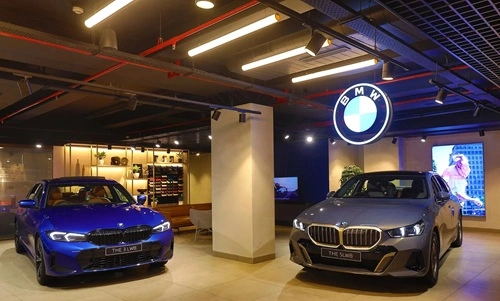
What It Means to “Franchise” BMW in India
In India, BMW does not offer franchising in the traditional smaller‐scale sense. Instead, it grants authorized dealership rights to large investors or groups who set up full-fledged showrooms, service centers, and inventory facilities, under strict brand compliance.
This arrangement is better described as a dealership partnership, rather than a typical franchise model.
Estimated Investment Breakdown
Based on multiple industry sources, here’s a structured financial layout of what’s generally required:
Total Investment Range: ₹15 crore to ₹20 crore
Investment Components:
- Franchise / Dealership Fee: ₹2–5 crore dependent on city tier
- Showroom & Interior Setup: ₹10–20 crore for premium design, customer lounges, and display areas
- Service Center Infrastructure: ₹5–10 crore for specialized diagnostic tools and workshop bays
- Initial Vehicle Inventory: ₹5–8 crore worth of BMW models and test‑drive units
- Working Capital: ₹1–2 crore to cover staffing, marketing, utilities, and operational costs
A more conservative estimate from other sources suggests up to ₹50 crore may be needed in upscale metro settings or multi‑brand expansion scenarios.
Spatial Requirements
BMW requires prime real estate in metro and Tier‑1 cities:
- Showroom: 8,000–10,000 sq ft
- Workshop: 10,000–15,000 sq ft
These footprints ensure visible display for vehicles and professional service delivery.
Projected Revenue & Profitability
Revenue Streams:
- New vehicle sales (sedans, SUVs, EVs)
- After‑sales services (maintenance, repairs, spare parts)
- Pre‑owned certified car sales and accessories
Financial Outlook:
- Annual revenue: ₹50 crore to ₹100 crore per dealership depending on location and scale
- Retail vehicle margin: 10–15% per unit
- After-sales margin: 20–30%—often the more stable profit stream
- Break-even period: 3–5 years if managed efficiently
One analytical source reports a balanced revenue contribution between sales and services, which underpins sustainable profit.
Eligibility & Partner Requirements
BMW applies rigorous selection standards for dealership partners:
- Financial strength: Net worth typically ₹100 crore; able to invest ₹15–50 crore
- Experience: Prior automotive/retail experience preferred; operational and customer‑service acumen essential
- Location access: Must possess or acquire prime real estate in a high-demand urban or Tier‑1 market
- Commitment to brand standards: Must follow BMW’s global facility, service, and customer experience protocols
Application & Onboarding Process
- Submit dealer inquiry through BMW India’s official portal.
- Submit financial documentation, business plan, and preferred location proposals.
- If shortlisted, site evaluation and executive interviews are conducted.
- Sign multi-year dealership agreement (typically 5–10 years), pay fees, and receive brand toolkit.
- Construct showroom and workshop under brand guidance.
- Train staff on sales, customer care, and technical service modules.
- Launch with coordinated marketing, inventory stocking, and operational readiness.
Final Verdict:
Yes—for experienced investors with deep pockets. Establishing a BMW dealership in India commands:
- A total capital outlay of ₹15–20 crore, with potential to go up to ₹50 crore or more;
- Commitment to luxury service standards in showroom and after-sales;
- Long-term play: expected break-even in 3–5 years;
- Potential for high-margin returns in both sales and services.
BMW’s global brand fiction, strong customer perception, and product breadth—including EVs—offer scale and visibility. But entry thresholds and operational demands make it accessible only to large-scale corporate or entrepreneurial partnerships.