 By BSTeam
 Artificial intelligence chatbots are now widely used in digital banking to reduce customer support wait times and automate routine queries. Many banks use AI-powered systems to answer questions related to:
- Fixed deposits
- Loan interest rates
- Service charges
- Account policies
- Credit card information
- Digital banking procedures
However, AI systems sometimes generate incorrect answers confidently. This problem is commonly called an AI hallucination.
Customers using the IDBI Bank chatbot have occasionally reported situations where the AI assistant provides outdated loan rates, incorrect policy information, imaginary fee waivers, or inaccurate banking rules.
These errors can create serious confusion because the chatbot often sounds highly confident even when the information is wrong.
Here is a complete guide to understanding and resolving IDBI Bank AI chatbot hallucination and wrong policy information issues safely.
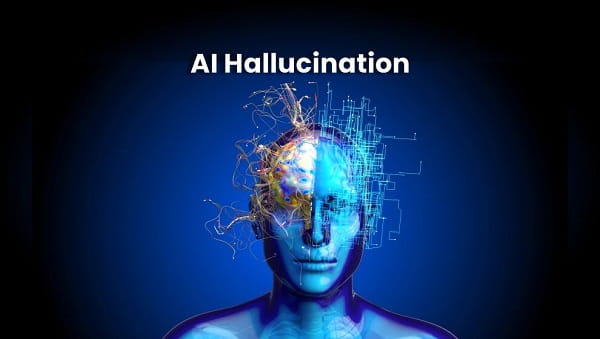
What Is an AI Hallucination in Banking?
An AI hallucination happens when a chatbot generates information that appears believable but is factually incorrect.
In banking environments, this may involve:
- Wrong FD interest rates
- Incorrect minimum balance rules
- Fake waiver schemes
- Outdated loan policies
- Incorrect eligibility requirements
- Imaginary charges or penalties
The AI is not intentionally lying. Instead, it predicts likely text responses based on patterns and incomplete context.
Why AI Chatbots Give Wrong Banking Information
Outdated Backend Data
Most banking AI systems rely on Retrieval-Augmented Generation (RAG) databases rather than only raw AI training.
If backend banking policy databases are not updated quickly, the chatbot may continue using old information.
Context Drift During Long Conversations
Very long or complicated questions can confuse the chatbot’s context handling.
The AI may start prioritizing conversational flow over strict factual accuracy.
Missing Policy Information
If the AI cannot locate exact policy details, it may attempt to “fill in” missing information instead of admitting uncertainty.
Common Symptoms Customers Face
Users commonly report:
- Different answers for the same question
- Unrealistic interest rates
- Wrong loan repayment information
- Non-existent offers
- Incorrect penalty details
- Contradictory policy explanations
- Chatbot looping repeatedly
- Fake eligibility claims
These problems are more dangerous in financial decision-making situations.
What Customers Should Do Immediately
Never Rely Solely on the Chatbot
AI chatbot responses should not be treated as legally binding banking confirmation.
Always verify important details separately before:
- Opening deposits
- Taking loans
- Closing accounts
- Paying penalties
- Investing money
Reset the Chatbot Session
Sometimes chatbot memory loops create repeated misinformation.
Try typing:
- “Restart”
- “Reset”
- “Main Menu”
This forces the AI system to clear temporary conversation context.
Refresh the Browser or App
If the chatbot continues behaving incorrectly:
- Close the chat window
- Clear browser cookies for the banking site
- Refresh the webpage
- Start a fresh session
This removes stale temporary chatbot states.
Cross-Verify Policies Through Official Sources
Always confirm important banking information through:
- Official interest rate tables
- Bank circulars
- Branch staff
- Customer care
- Official PDF documents
Static official banking tables usually take legal priority over AI-generated text.
Contact Official Customer Support
If the chatbot gives suspicious or conflicting information:
- Call official customer care
- Visit the branch
- Use official support email
- Escalate to human support agents
Most banking chatbots allow escalation through commands like:
- “Human Support”
- “Talk to Executive”
- “Agent”
Take Screenshots of Incorrect Responses
Keep evidence of:
- Wrong chatbot statements
- Time and date
- Session screenshots
- Policy claims
- Financial figures shown
These records may help during complaint escalation or dispute handling.
Are Banks Legally Bound by Chatbot Errors?
Usually no.
Most banking systems clearly state that:
- AI tools provide general guidance
- Final agreements override chatbot responses
- Official signed documents remain legally valid
- Published banking schedules take precedence
This is why customers should verify all critical financial information independently.
Why Rephrasing Questions Changes the Answer
Generative AI systems rely heavily on wording patterns.
Even small wording changes may:
- Trigger different retrieval results
- Shift probability models
- Change contextual interpretation
This is why the same chatbot sometimes gives different responses to similar questions.
How Banks Can Reduce AI Hallucinations
Technical teams often improve chatbot reliability by:
- Updating backend databases frequently
- Lowering AI randomness settings
- Adding guardrail systems
- Restricting unsupported answers
- Improving semantic search matching
Some systems are configured to say:
“I cannot verify that information right now”
instead of generating uncertain responses.
Important Security Warning
Scammers sometimes exploit AI confusion by sending fake chatbot links or pretending to be “AI banking support.”
Never share:
- OTP
- Debit card PIN
- Net Banking password
- CVV
- Aadhaar OTP
through unofficial chatbot systems or suspicious websites.
Final Thoughts
IDBI Bank AI chatbot hallucination problems are usually caused by outdated backend data, context drift, incomplete retrieval systems, or generative AI prediction errors. While AI assistants can improve customer support speed, customers should never rely entirely on chatbot-generated banking information for important financial decisions.
Always cross-check sensitive policy details through official banking documents, customer support, or branch verification before acting on AI-generated responses.
FAQs
Q: What is an AI chatbot hallucination?
A: It happens when the AI generates incorrect information that sounds believable and confident.
Q: Can banking chatbots give wrong interest rates?
A: Yes. Outdated backend data or context errors may cause incorrect rate information.
Q: Are chatbot responses legally binding?
A: Usually no. Official bank documents and agreements take precedence.
Q: Why does the chatbot give different answers to similar questions?
A: AI systems interpret wording differently and may retrieve different contextual information.
Q: Should I trust chatbot loan offers completely?
A: No. Always verify through official banking channels first.
Q: Can refreshing the session fix chatbot issues?
A: Yes. Resetting the conversation sometimes clears corrupted context memory.
Q: What should I do if the chatbot gives dangerous financial advice?
A: Take screenshots and contact official customer support immediately.
Q: Can AI hallucinations happen in all banking chatbots?
A: Yes. Any generative AI system can occasionally produce inaccurate information.
 Meghna Sharma