
 By Meghna Sharma
 Community banking is often described in personal terms: familiar staff, nearby branches, and decisions made by people who know the area. Those features matter, but their value reaches beyond convenience. A community bank can connect local deposits, relationship lending, tailored services, and civic engagement in ways that support businesses and the wider economy.
The model works best when personal access is paired with responsible underwriting, useful technology, sound security, and sufficient financial capacity. Local knowledge should improve a decision, not replace evidence. When those elements are balanced, community banks can turn proximity into practical economic impact.
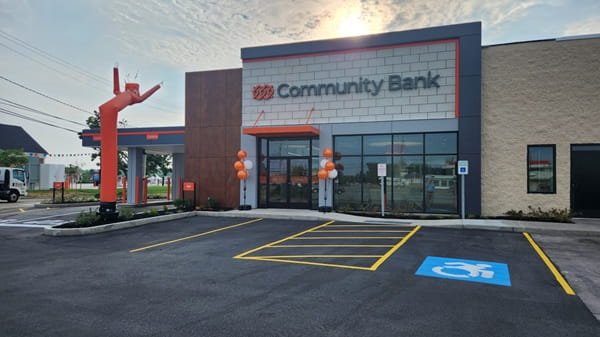
What Makes a Bank a Community Bank?
There is no single universal definition based only on total assets. An institution with less than $10 billion in assets is often described as a small or community-oriented bank, and that threshold appears in certain banking rules. However, the FDIC’s research definition also considers traditional lending and deposit activity, limited geographic scope, and a relationship-based business model.
That distinction matters. Size can influence resources and organizational complexity, but it does not prove that decisions are local or customer service is personalized. Businesses should look at where the bank operates, who has lending authority, how it serves its communities, and whether its products match local needs.
A bank can be relatively small and still use rigid processes. Another may be larger yet maintain strong local leadership. The label is a starting point, not a substitute for evaluating the institution.
Deposits Provide a Foundation for Lending
Checking accounts, savings accounts, and other deposits are an important source of bank funding. They help support lending and other balance-sheet activities, including business loans, commercial real estate credit, and residential mortgages.
It is too literal to say that every deposited dollar remains in the same neighborhood or funds one specific loan. Banks manage liquidity, capital, risk, investments, and regulatory requirements across their operations. Still, an institution focused on a defined area may direct a meaningful share of its lending activity toward customers and projects in that market.
Businesses should also confirm FDIC membership and understand deposit insurance. The standard amount is $250,000 per depositor, per insured bank, for each ownership category. Coverage depends on account ownership and titling, not the number of branches or accounts alone.
Local Lending Keeps Capital Working Nearby
Credit can help a company purchase equipment, carry inventory, manage payments, improve property, open a new location, or hire staff. When community banks finance viable local businesses, the effects can move through suppliers, employees, landlords, and customers.
Mortgage and construction lending may support housing and property improvement, while business lending can strengthen commercial corridors and municipal tax bases. These outcomes are indirect rather than guaranteed. A loan must still be affordable, productive, and supported by a realistic repayment plan.
The Community Reinvestment Act also encourages insured depository institutions to help meet the credit needs of the communities where they operate, including low- and moderate-income neighborhoods, consistent with safe and sound banking. An institution’s record is periodically evaluated by its federal regulator.
Relationship Decisions Add Useful Context
Automated metrics can process large volumes of information consistently, but they may not capture why a business has seasonal revenue, an unusual payment cycle, or a short operating history. Community banks often emphasize direct conversations and information developed through customer relationships.
A local lender may understand the area’s industries, economic cycles, property conditions, or development plans. That knowledge can help the banker ask more precise questions about credit, cash flow, collateral, and risk. It may also help explain a strong business opportunity that looks unfamiliar in a national formula.
Relationship focus does not mean lower standards or automatic approval. Financial statements, tax returns, credit history, assets, and the ability to repay remain central. Personal knowledge adds context; it does not erase weaknesses in the application.
Human Access Can Improve the Borrowing Experience
Personalized service is one of the clearest potential advantages of community banking. A business owner may be able to speak with a branch leader, loan officer, or other decision-maker who understands the account and can explain the process.
That access can be useful when the company needs a line of credit, term loan, debit card control, remote deposit capture, payment support, or help resolving unusual activity. Tailored banking solutions may combine checking, savings, credit cards, and cash-management services around the customer’s actual operations.
Human access should be evaluated, not assumed. Owners can ask who handles questions after closing, how quickly the team responds, whether authority remains local, and what happens outside normal hours. Strong service includes clear communication as well as friendly interaction.
Flexibility Still Requires Financial Discipline
Community banks may be willing to examine unique borrower circumstances instead of relying entirely on standardized formulas. A lender might consider management experience, local demand, customer concentration, seasonal patterns, or a long-standing account relationship alongside quantitative information.
Flexibility can affect loan structure as well as approval. Payment timing, maturity, collateral, or reporting requirements may be shaped around the business purpose, subject to the bank’s policies and applicable rules. That can produce a more appropriate solution than forcing every customer into the same product.
However, flexibility is not permission to ignore risk. Borrowers should expect documentation, conditions, and ongoing reporting. They should compare the interest rate, fees, guarantees, security interests, prepayment terms, and total cost before accepting any loan.
Community Impact Extends Beyond Banking Products
Community banks can support local development through more than loans. Their staff may serve nonprofit boards, sponsor community events, provide financial education, participate in outreach, or connect organizations with relevant resources.
These activities strengthen relationships and give the bank information about emerging needs. A nonprofit may need account services and dependable payments; a local government may seek an institution that understands public finance; a new business may benefit from introductions to professional advisors. Referrals should always be independently evaluated, but a trusted connection can save time.
Civic engagement can also reinforce accountability. Customers see whether the institution remains present when the community faces disruption, economic pressure, or redevelopment. The most credible impact is demonstrated through consistent actions rather than marketing language.
Evaluate the Results, Not Just the Local Label
Before choosing a community bank, a business should compare loan capacity, decision authority, branch locations, digital banking, payments, account fees, customer service, security, and deposit products. It should also review the bank’s FDIC status and publicly available Community Reinvestment Act performance information.
Ask how local knowledge changes the institution’s approach. Does it offer relevant services? Can the staff explain the market? Are decisions communicated clearly? Does the bank support small businesses, mortgages, nonprofits, and community development in observable ways?
Community banks can create value when deposits support productive lending, relationships improve judgment, and local engagement strengthens economic connections. Their role as a financial partner may advance business investment and long-term growth, but those benefits depend on earned trust and measurable service. The most effective institutions do not rely on size or proximity alone. They combine personalized service, responsible flexibility, and a sustained commitment to the people and businesses in the area.